
Sustainable Development
Encourages eco-conscious learning through hands-on initiatives promoting global citizenship.
Learning to Care for the Planet
At SAI International School, learning extends far beyond textbooks and classrooms. We believe that true education nurtures awareness, responsibility, and action. The campus itself is thoughtfully designed as a living learning space, enabling students to experience sustainability first-hand and grow into environmentally conscious global citizens.
Through hands-on initiatives and eco-friendly practices, students gain practical understanding of how everyday actions can contribute to a healthier planet.
Rainwater Harvesting
The school has a well-structured Rainwater Harvesting System that collects water from rooftops and channels it through a network of pipes into specially designed collection chambers and underground storage tanks.
The harvested rainwater is used for:
- Supplying water to washrooms
- Mopping and cleaning the school premises
- Recharging groundwater levels
This entire system is demonstrated to students, inspiring them to practise water conservation at home and motivate their communities to use this precious resource responsibly
Rainwater Harvesting
The school has a well-structured Rainwater Harvesting System that collects water from rooftops and channels it through a network of pipes into specially designed collection chambers and underground storage tanks.
The harvested rainwater is used for:
- Supplying water to washrooms
- Mopping and cleaning the school premises
- Recharging groundwater levels
This entire system is demonstrated to students, inspiring them to practise water conservation at home and motivate their communities to use this precious resource responsibly
Sewage Treatment Plant (STP)
SAI International School houses an in-campus Sewage Treatment Plant (STP) with a capacity of 25 KLD (MBBR technology). The plant treats wastewater generated from the school and hostels by removing pollutants, breaking down organic matter, and restoring oxygen levels in the treated water.
The recycled water is used to:
- Water gardens and plants
- Recharge groundwater
By situating the STP within the campus, students gain a clear understanding of wastewater management and sustainable water reuse through direct observation.
Solar Energy Initiative
To promote clean and renewable energy, solar panels are installed across the school and hostel premises. The solar energy generated is used for:
- Lighting the campus
- Heating water in the school and hostels
This initiative not only conserves energy but also serves as a real-life classroom, helping students understand the importance and impact of renewable energy sources and responsible consumption.
Vermi Composting
Committed to organic and sustainable practices, the school maintains vermi-compost pits that transform biodegradable waste into nutrient-rich organic manure. Dried leaves, vegetable and fruit peels, and soil are layered to create natural fertilizer used for the school gardens and lawns.
Vermi-composting helps:
- Promote healthy plant growth
- Restore nutrients to the soil
- Convert waste into valuable organic fertiliser
- Ensure a non-hazardous, eco-friendly process
Students from Play Group onwards actively participate in this hands-on activity, making learning engaging, enjoyable, and impactful.
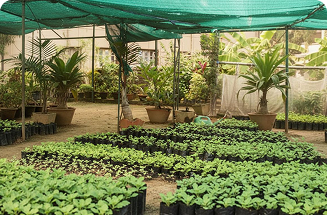
Green House
The school’s Green House is a thriving space dedicated to nurturing plant life and environmental learning. A variety of medicinal and ornamental plants are cultivated here, reinforcing the importance of biodiversity and green living.
Functioning as a mini environmental lab, the Green House allows students to study:
- Climate change and global warming
- Plant responses to light, heat, and cold
- Methods to protect and sustain plant life
Plants grown here are used during plantation drives and as eco-friendly gifts, reflecting the school’s philosophy of encouraging plant gifting over flower bouquets.
Recognition and Commitment
SAI International School’s dedication to environmental education has earned national recognition. The school was adjudged 4th in India among 2,300 schools in the CII Green I Contest, for its pioneering efforts in imparting environmental education by 2030. The award was presented by the Hon’ble Cabinet Minister (Energy), Government of India, at the 9th Green Building Congress.
Additionally, the school has been a proud recipient of the Green School Award since 2011 for the Best School Garden. With extensive green spaces and plantation drives on every auspicious occasion, the school continues to take meaningful steps towards preserving the environment and instilling sustainability values in students.